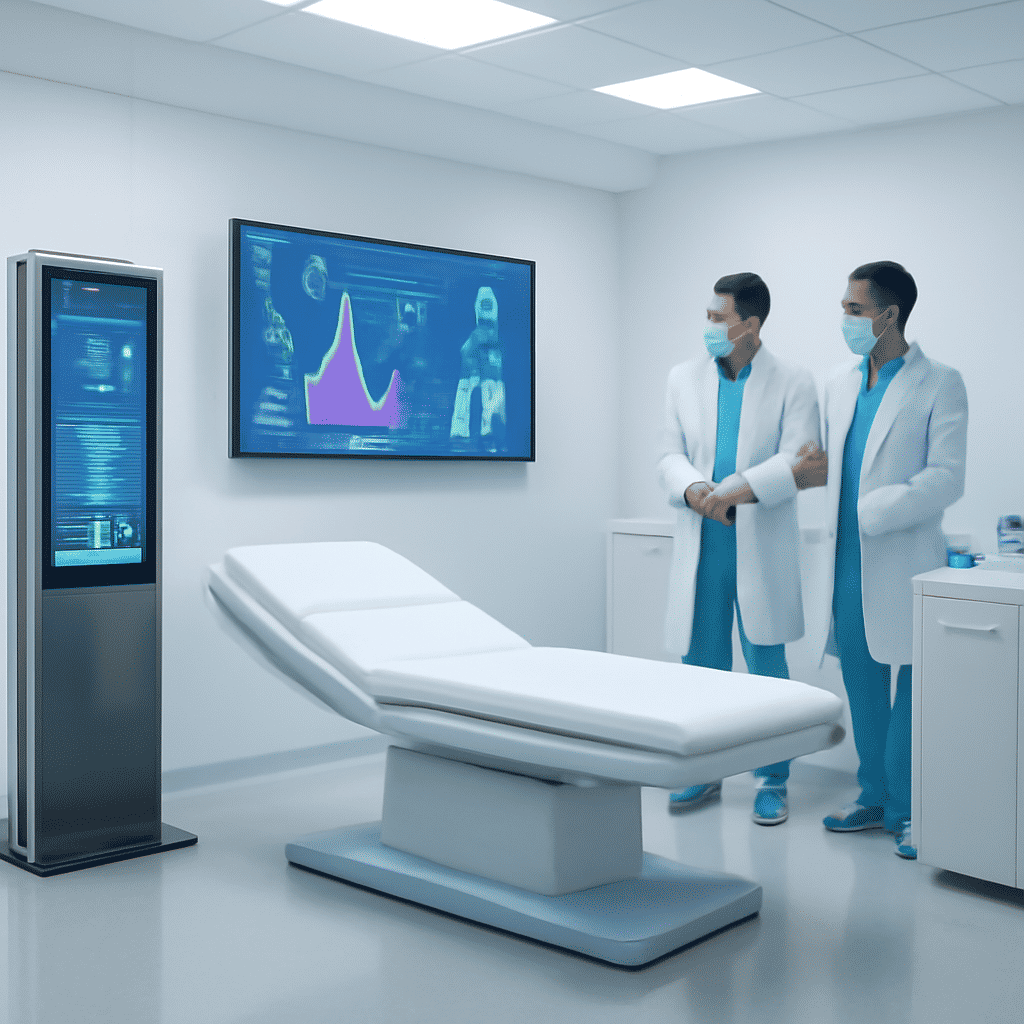
Artificial intelligence (AI) has become a transformative force in modern medicine, reshaping the landscape of healthcare with its integration into diagnostics and treatment. With its ability to process vast amounts of data and identify patterns beyond human capability, AI is propelling the medical field towards unprecedented levels of accuracy and efficiency.
One of the most significant contributions of AI in healthcare is its role in diagnostics. Traditional diagnostic methods, while effective, can be time-consuming and sometimes subject to human error. AI systems, however, excel in analyzing medical data—from imaging results to genetic testing—at an extraordinary pace, enabling early and accurate disease detection. For instance, AI algorithms have proven exceptional in interpreting medical images, such as X-rays and MRIs, often identifying anomalies that human radiologists might overlook. This rapid analysis can be crucial for conditions like cancer, where early detection significantly impacts treatment outcomes.
In addition to diagnostics, AI has revolutionized treatment planning and personalized medicine. AI models can sift through extensive datasets to identify which therapies are most likely to be effective for individual patients based on their unique genetic profiles. This approach not only enhances treatment efficacy but also minimizes adverse effects, as therapies can be tailored to suit each patient's specific needs.
Furthermore, AI-driven robotic systems have begun assisting in surgical procedures, providing precision and stability that surpass human capabilities. These robotic assistants, equipped with AI, can perform complex operations with minimal invasiveness, reducing recovery times and improving surgical outcomes. Surgeons can rely on these systems for real-time data and feedback, further enhancing their decision-making processes during critical procedures.
Despite these advances, the integration of AI in healthcare is not without challenges. Concerns regarding data privacy, algorithmic bias, and the need for robust ethical frameworks are essential considerations as AI technology continues to evolve. Ensuring that AI systems are transparent and that they augment rather than replace human decision-making is crucial for maintaining trust among patients and healthcare providers.
In summary, AI is at the forefront of a new era in modern medicine, enhancing the capabilities of healthcare professionals and improving patient outcomes. As technology continues to advance, the collaboration between AI and human expertise will likely lead to more groundbreaking innovations, ultimately redefining the future of healthcare. By harnessing the power of AI, the medical community can continue its relentless pursuit of precision, efficiency, and empathy in patient care.