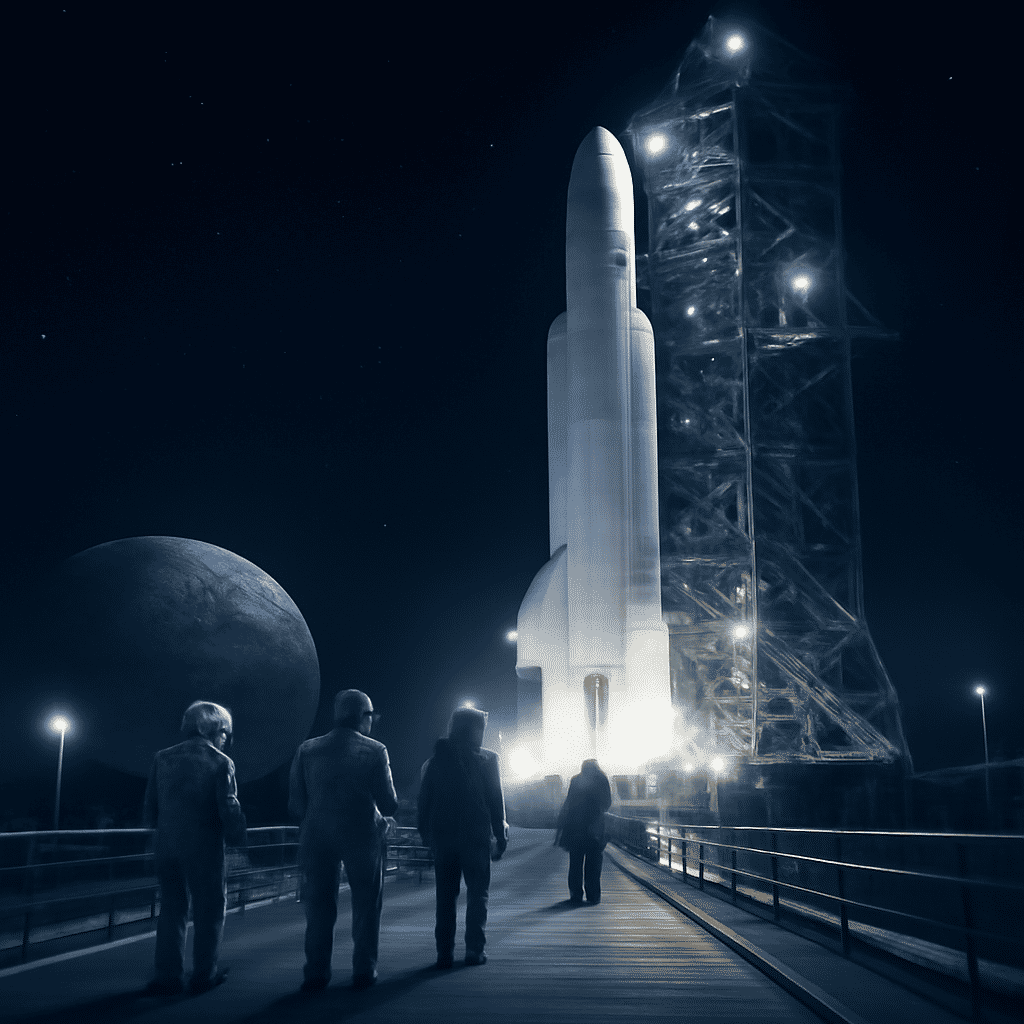
The realm of space exploration has seen remarkable strides in recent years, with advancements in technology and an ambitious push for new missions beyond Earth capturing global attention. This new era of space exploration is marked by enhanced collaboration between government agencies and private companies, innovative technologies, and renewed interest in humanity's quest to explore and understand the universe.
One of the most significant advancements has been the development and deployment of reusable rockets. Companies like SpaceX have pioneered technologies that enable launch vehicles to return safely to Earth for re-use, drastically cutting costs and increasing frequency of launches. This shift is pivotal, facilitating more frequent access to space and allowing for greater flexibility in planning missions. The Falcon series of rockets exemplify these advancements, marking a bold step towards making space travel more sustainable and economically viable.
Furthermore, the launch of the James Webb Space Telescope represents a monumental leap in our ability to observe distant astronomical phenomena. With its advanced imaging technology and location at the second Lagrange point (L2), the telescope offers unprecedented clarity and depth in space observation. The data collected by James Webb is expected to unravel mysteries surrounding the formation of galaxies, stars, and potentially even the origins of life itself. This telescope underscores the synergy between cutting-edge technology and our perennial quest for cosmic knowledge.
On planetary exploration fronts, there is significant momentum surrounding missions to Mars and the Moon. NASA's Perseverance rover is actively exploring the Martian surface, searching for signs of ancient life and collecting samples for future return missions. This initiative is a precursor to new human exploration missions planned in the coming decade. Simultaneously, NASA’s Artemis program aims to return humans to the Moon by the mid-2020s, notably focusing on paving the way for sustainable lunar presence and further exploration of Mars. These missions exemplify a renewed resolve to explore celestial frontiers.
Private industry's involvement in these missions cannot be overstated. Companies like SpaceX and Blue Origin have become instrumental players in the space exploration game, introducing innovations like space tourism and prospective habitable habitats on other planets. Their involvement not only drives competition but also injects fresh resources and ideas, catapulting the pace of development in space exploration technology.
Emerging markets and countries are also staking their claims in space. Nations like India and China have accelerated their space programs, achieving breakthroughs like landing spacecraft on lunar surfaces, launching mars probes, and establishing comprehensive satellite networks. Their entrance into the space exploration sphere increases global collaboration and competition, which benefits the broader advancement of space technologies.
In conclusion, the latest advancements in space exploration are paving the path for a future where humanity's presence beyond Earth is not just a possibility, but an eventual certainty. With burgeoning technologies, a collaborative global community, and relentless curiosity, the frontiers of space exploration continue to expand, promising discoveries that may fundamentally enhance our understanding of the universe and our place within it.